There are some unusual rules around the world that often make international news. In Singapore, for example, chewing gum is banned to keep the streets clean, while in Venice, feeding pigeons can result in a hefty fine. But in some areas of the world, authorities have gone even further: they have banned death within their territory.
These measures, as strange as they may seem, are not driven by the desires of local officials, but by practical reasons – sanitary, demographic or religious, writes Huffpost.
Longyearbyen (Svalbard, Norway)
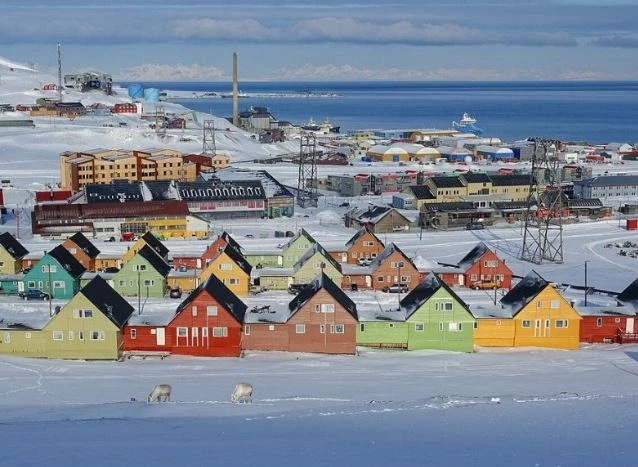
On the edge of the Arctic, about 1,500 kilometers from the North Pole, lies Longyearbyen. For more than 70 years, it has been forbidden to die in this town. The 1950 law closed local cemeteries after it was discovered that extreme temperatures hindered the decomposition of bodies, risking the spread of viruses and epidemics.
Since then, terminally ill or elderly people at imminent risk of death have been sent to one of Norway’s cities. The town has a practically zero mortality rate – because residents must leave before they take their last breath.
Sellia (Calabria, Italy)
This village of around 550 inhabitants adopted a regulation in 2015 that “prevents” its residents from getting sick and, as a result, dying. The village was at risk of complete depopulation: in 1960 it had 1,300 inhabitants, while today it has less than half that number.
According to the regulation, every resident is obliged to have a medical check-up once a year. Anyone who avoids it faces a tax increase. The aim of the measure is to promote health prevention and preserve the village’s population – and so far it has led to over 100 new medical visits.
Itsukushima (Miyajima, Japan)
On the sacred island of Itsukushima, home to one of the most important Shinto shrines, both birth and death have been banned since 1878. To preserve the spiritual purity of the place, authorities do not allow the construction of cemeteries or hospitals. Pregnant women and the seriously ill are sent elsewhere for childbirth or treatment.
Lanjarón and Darro (Granada, Spain)
Similar measures have existed in Spain. In 1999, the mayor of Lanjarón issued a decree prohibiting his 3,870 residents from dying. The local cemetery was full and there was no space for new graves. The news even caught the attention of the New York Times. Just a week later, a 91-year-old man “violated the law” but was buried without a fine for his family because he was a friend of the mayor, making the decree even more symbolic.
In 2002, the neighboring municipality of Darro issued an order entitled “Death Prohibited,” “demanding” that people not die within the urban area, due to a lack of cemetery space.
Cultures and traditions may vary around the world, but these examples show that the creativity of local authorities often produces rules that defy logic – and which therefore make international media news.