Garth Brooks & Trisha Yearwood’s Performance at Jimmy Carter’s Funeral Seen as Disrespectful – Sparks Controversy
A Heartfelt Farewell to a Cherished Leader: Remembering Jimmy Carter’s Memorial Service and the Debate Surrounding Imagine
On January 9, 2025, the National Cathedral located in Washington, D.C. turned into the center of a heartfelt national goodbye. Family, dignitaries, and fans came together to pay tribute to the late President Jimmy Carter—a remarkable figure in American public service, humanitarian efforts, and moral guidance, who left us at the age of 100. Carter, the longest-living former president in U.S. history, created a legacy that went beyond political boundaries.
Amid all the heartfelt tributes to his years of kindness and dedication to the public, one musical performance at the memorial stirred up quite a bit of discussion. The choice by country music stars Garth Brooks and Trisha Yearwood to perform John Lennon’s Imagine sparked a lively debate about faith, creative freedom, and the most appropriate way to honor a deeply religious leader within a place of Christian worship.
An Overview of Carter’s Life and Legacy
Jimmy Carter was born on October 1, 1924, in Plains, Georgia, and he held the office of the 39th President of the United States from 1977 to 1981. Even though he served only one term in the nation’s highest office, his influence on global diplomacy, public health, and humanitarian efforts resonated for the next forty years. Together with his wife Rosalynn Carter, whom he was married to for more than 75 years, he worked hard to eliminate diseases like guinea worm, took part in diplomatic efforts in conflict zones, and passionately advocated for fair elections globally.
Additionally, Carter became closely associated with Habitat for Humanity, dedicating countless hours, even in his nineties, to hammering nails and assisting in the construction of affordable homes for families in need. His steadfast dedication to public service resonated with people across the political spectrum, making the Carters symbols of humility and strong moral principles.
When Carter began hospice care in late 2024, messages of support and kindness poured in from all corners of the world. Leaders commended his dedication to fostering peace in areas of conflict, while communities respected his resilience and modesty. Carter, at the age of 100, ultimately faced a series of health challenges, resulting in a deep sense of sorrow across a nation that admired and cherished him for his lifelong commitment to humanitarian work.
A Heartfelt Goodbye at the National Cathedral
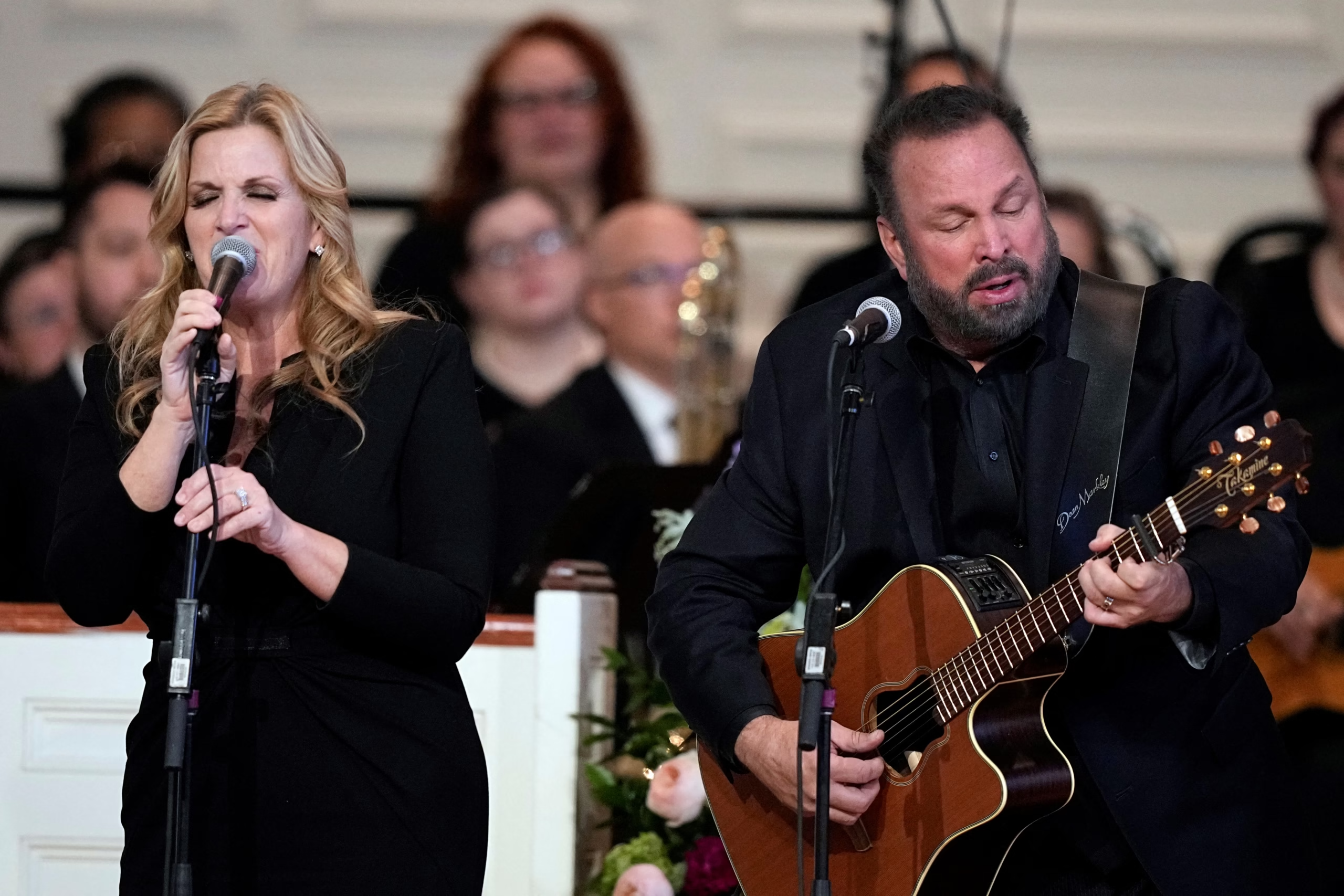
Garth Brooks and Trisha Yearwood perform “Imagine” at a tribute service for former US first lady Rosalynn Carter at Glenn Memorial Church at Emory University on November 28, 2023 in Atlanta. Carter died on November 19, aged 96, just two days after joining her husband in hospice care at their house in Plains. (Photo by Brynn Anderson / POOL / AFP) (Photo by BRYNN ANDERSON/POOL/AFP via Getty Images)
Carter’s memorial service on January 9, 2025, brought together a remarkable assembly of former presidents, congressional leaders, governors, international figures, and everyday Americans who had been inspired by Carter throughout the years. The National Cathedral, a stunning piece of architecture and a common venue for state funerals and significant ceremonies, provided a poignant setting for the final goodbye to a man whose moral vision was frequently conveyed through a gentle yet steadfast grace.
The service featured touching eulogies delivered by close friends, readings from Scripture that reflected Carter’s Christian beliefs, and personal stories highlighting his unwavering commitment to making the world a better place. Numerous people highlighted Carter’s humility, shown through his readiness to meet volunteers at Habitat for Humanity sites and his dedication to teaching Sunday school lessons in his local church right up until his later years.
As the ceremony hit its emotional peak, an unexpected moment took center stage: the performance of “Imagine” by Garth Brooks and Trisha Yearwood, two country music stars who shared a deep, enduring friendship with Jimmy and Rosalynn Carter. Although the choice was made with good intentions, it quickly turned into the most discussed topic of the day.
The Performance of Imagine: Where Belief and Melody Converge
John Lennon’s 1971 hit “Imagine” is often seen as a powerful anthem for peace, unity, and a dream of a world without divisions. Yet, even though it’s recognized as a timeless classic, the song features some notably irreligious lines: “Imagine there’s no heaven… No hell below us… and no religion too.” For a lot of listeners, these lyrics seem to call for a secular or pluralistic perspective, and they have sparked debate in religious circles for many years.
At the National Cathedral, a place of worship with deep Christian roots, the contrast between the song’s secular idealism and the spiritual weight of the setting was strikingly clear. Right from the opening notes, a number of people in the audience expressed admiration for the heartfelt nature of the performance, while others felt a sense of discomfort, viewing it as an unsuitable selection for the funeral of a devoted Christian leader. The discussion on social media heated up rapidly.
The Backlash: Is it “Tone-Deaf” and “Disrespectful”?
Critics argued that choosing Imagine was a surprising decision, one that didn’t quite fit the atmosphere of a Christian service. Several of them highlighted the references to heaven and hell, indicating that these ideas conflicted with Carter’s strong beliefs. To emphasize this disagreement, one frustrated fan took to the internet to express: “Garth Brooks and Trisha Yearwood singing Imagine at a deeply Christian funeral?!!” That’s just terrible. Picture a world without Heaven.Seriously?Another user called it “the most inappropriate song for a Christian funeral.”
Some people raised concerns about how the decisions were made regarding the performance, implying that the person in charge of the music might have misunderstood the vibe of the event. Choosing a hymn or a classic gospel piece would have respected Carter’s beliefs while avoiding any controversy. They viewed the selection of Imagine as something that eclipsed the real reason for the day: honoring Carter’s life and legacy.
Champions of Imagine: Harmony, Togetherness, and Carter’s Unique Style
Even with the criticism, there were plenty of people who stood up for Brooks and Yearwood. They contended that the core message of Imagine—a heartfelt call for peace, unity, and overcoming human separations—was in strong harmony with Carter’s worldwide humanitarian efforts. They encouraged everyone to see beyond the literal interpretation of the lyrics and to embrace the song’s essence of universal unity, a theme that has always been at the heart of Carter’s perspective.
Carter’s own appreciation for the song was another crucial aspect of his defense. Throughout the years, he often shared that Imagine was one of his favorite songs. In interviews, he discussed how it resonates with audiences around the world, from the United States to Cuba, where a statue of Lennon serves as a symbol of the song’s worldwide cultural significance. Carter once referred to Imagine as a powerful anthem for our shared humanity, one that goes beyond borders and differing beliefs in the pursuit of peace. For many supporters, this provided ample reason for why Brooks and Yearwood felt at ease making that choice.
“It was truly stunning,” one defender shared online. “It’s important for people to grasp the feelings that the song conveys.” Another person added, “Music frequently carries deeper meanings.” Carter really loved Imagine. It embodies his greater aspiration for togetherness and a brighter future. I really don’t think it’s disrespectful in any way.
The Friendship Between Brooks, Yearwood, and Jimmy Carter
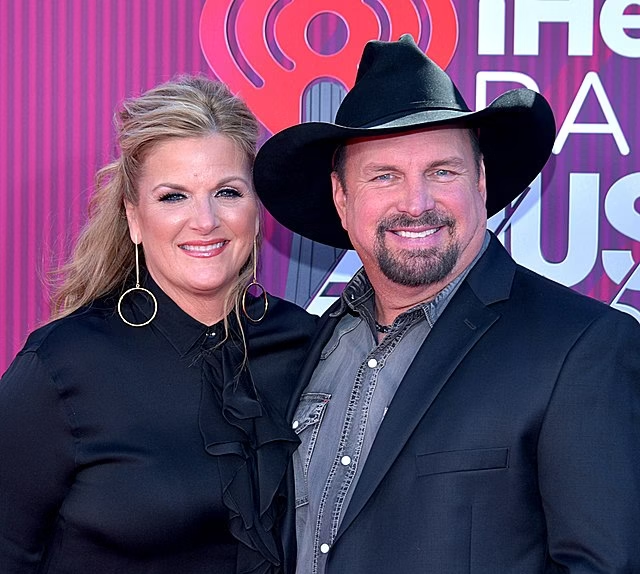
At the heart of the couple’s choice lies their personal connection with Jimmy Carter. Garth Brooks and Trisha Yearwood weren’t just famous artists invited to play at a prominent state funeral; they were close friends of the Carters for many years. Their bond had grown stronger over the years, particularly through their shared commitment to Habitat for Humanity. The Carters and the two country stars often joined forces at build sites, encouraging volunteer work and active involvement with local communities.
Trisha Yearwood once shared a story about Carter, who, even in his late eighties, bravely climbed a ladder to repair shingles on a roof, all while enduring the sweltering Georgia heat. Yearwood shared a story that highlighted Carter’s commitment—he didn’t just support a cause from afar; he actively engaged in it. Brooks pointed out that Carter’s boundless energy inspired them to stretch their own boundaries in their charitable efforts.
Considering this context, it appears that Brooks and Yearwood chose Imagine not to provoke political discussions or seek out controversy, but instead as a genuine expression of their common values with Carter. It was a heartfelt, personal gift—a sincere tribute to their friend and mentor that they believed would truly reflect his steadfast faith in the strength of togetherness.
Carter’s Belief and the Intricacies of Imagination
Carter was undoubtedly devoted, spending many years teaching Sunday school lessons at Maranatha Baptist Church in Plains, Georgia. However, the nuances of his faith often went beyond simple definitions. Carter had a perspective that valued empathy and understanding for individuals from various backgrounds and beliefs. This could shed light on why he appreciated a song that questions specific beliefs, recognizing in it a wider appeal for humanitarianism and peace, rather than simply rejecting Christianity outright.
Carter often highlighted in his speeches and writings that genuine faith can exist alongside a willingness to embrace those with differing beliefs. He focused on loving his neighbor and fostering global compassion rather than adhering strictly to dogma. Still, the tension arises from the differing interpretations of Christian tradition by some supporters and observers, particularly regarding how it should—or shouldn’t—connect with songs that challenge the afterlife or organized religion directly.