From ancient legends to modern films, stories about the healing power of love have captured human hearts across generations. Yet sometimes, these stories are not just fiction—they are real. One of the most emotional and medically groundbreaking events occurred in 1995 in a neonatal intensive care unit (NICU) in the United States, where a dying premature baby was saved not by advanced machines, but by the loving touch of her twin sister.
Paul Jackson and his wife welcomed twin daughters, Brielle and Kyrie, 12 weeks prematurely at UMass Memorial Hospital. Each baby weighed only two pounds, and their survival was far from guaranteed. Doctors warned the parents that the first 78 hours were critical, and even if the babies made it past that stage, their health could change without warning.
At three weeks old, baby Brielle began to deteriorate rapidly. Her heart rate spiked, her oxygen levels dropped dangerously low, and her tiny body started turning blue. Medical staff feared the worst. Despite every technological intervention, nothing seemed to calm her failing body.
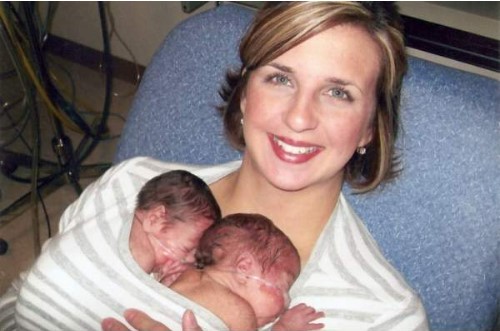
That is when NICU nurse Gayle Kasparian made a bold and unprecedented decision—one that would change neonatal medicine forever. She suggested placing Brielle in the same incubator as her stronger twin sister, Kyrie, a practice known internationally as Kangaroo Care but never before attempted in the United States for infants in critical condition.
What happened next left everyone in the room speechless.
As soon as baby Kyrie was placed beside her sister, she instinctively reached out and wrapped her tiny arm around Brielle. This gentle touch—later called the rescuing hug—had an immediate effect. Brielle’s heart rate stabilized, her breathing became steady, and her skin color returned to normal. It was as though her sister’s touch reminded her that she was not alone, giving her the strength to survive.
Dr. Stuart Weisberger of UMass Memorial later stated that this moment transformed neonatal care practices in the country. Before this event, twins and triplets were routinely kept in separate incubators. After this powerful demonstration of the life-saving impact of physical closeness, hospitals across the United States began adopting skin-to-skin twin care to help regulate premature babies’ vital signs.
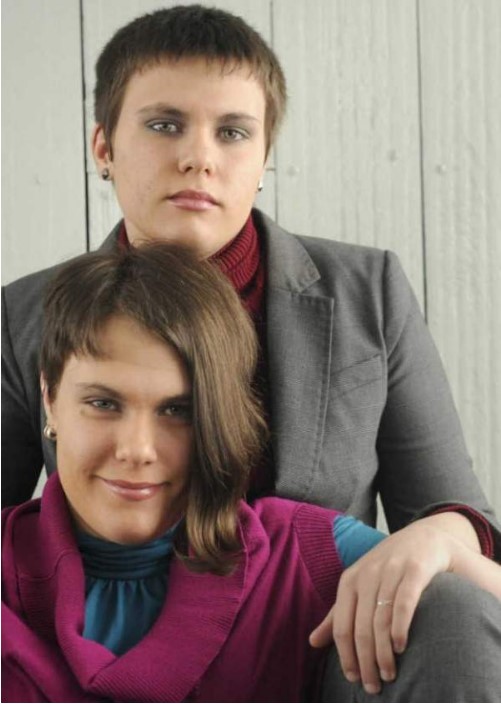
Today, Brielle and Kyrie are healthy young adults, deeply bonded by the miracle that saved one of their lives. They share a connection that goes beyond sibling love—a living example of how human touch can heal in ways medicine cannot always explain.
This real-life miracle reminds us that sometimes, the greatest healing power lies not in machines or medicine, but in the simple, powerful act of love.