The snow was clean enough to squeak under boots, a pale sheet pulled tight over the tundra. Out of that bright quiet, a white reindeer broke from the treeline and ran straight toward the road, antlers swept back, steam rolling from its nose. It didn’t veer, didn’t bluff, didn’t bolt across the lane. It matched pace with the truck like a runner beside a train, then moved ahead and looked back—a motion simple enough to read in any language: come with me.
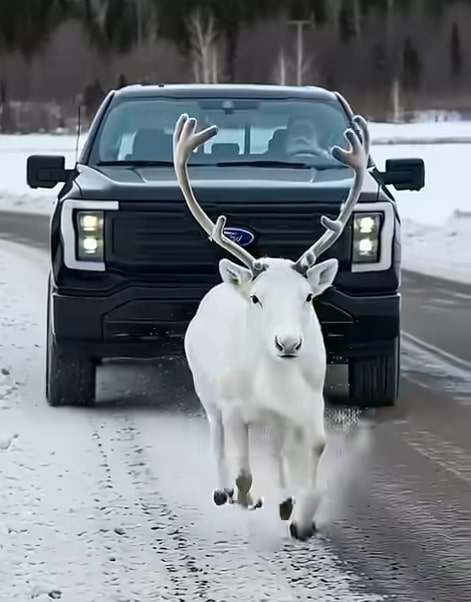
The driver slowed to a crawl, cracked the window, and let the cold pour in. The reindeer trotted just far enough to keep his attention and then cut left into the open. Tracks braided the snow in a frantic loop, hooves digging in and sliding, and there—where the crust turned to exposed earth—yawned a perfect circle of trouble. A deep excavation, a collapsed den, a sink left by thawing ground—whatever its origin, it had become a trap. At the bottom, two shapes moved: another white reindeer and a calf, circling the wall with no purchase, muscles shaking with the effort of trying.
The driver killed the engine and stepped out, palms visible, voice low. The sentinel—the one who had come for help—stood at the rim and didn’t flinch. Trust isn’t a ceremony out here; it’s a series of small decisions. He made the first: remove hazards. He checked the edge for undercut snow, cleared loose branches, and scanned for a slope shallow enough to walk. None. He would need a bridge the animals could understand in a single glance.
From the truck bed he pulled a ladder—heavy, scuffed, good steel with wide rungs. He slid it forward on the snow until the front rails hooked the lip. The trapped adult lifted its head and held still, nostrils flaring, as if measuring the angle. The calf pressed against the adult’s side, all knees and panic. The rescuer took a careful breath and climbed down backward, one boot at a time, feeling the raw dirt crumble under his heels. The pit smelled like thawed earth and fear.
Up close he could see the strain: small cuts where hooves had scraped rock, a tremor in the calf’s flank that made him slow everything even more. He talked in a rhythm that was more for himself than for them—steady words, steady hands. He turned the ladder toward the gentlest quadrant and tapped a rung with his knuckles. The adult reindeer understood before he finished tapping. It placed one hoof, then another, the way you test a frozen pond. The ladder flexed. He braced. Two more steps and the animal found the geometry of escape, shoulders rolling, hips catching, until snow made a soft sound under its weight at the rim.
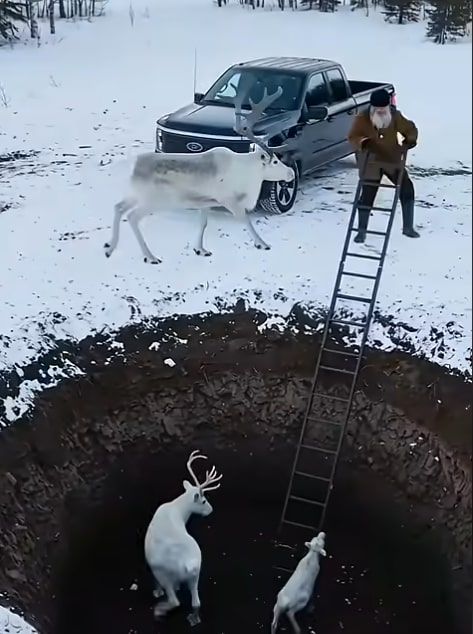
The calf remained. The rescuer moved sideways, blocking the pit wall with his body to keep the little one from trying to scramble where the dirt would shear. He lowered the ladder again and tucked the bottom rails into a notch, building a tiny shelf with his boot. The calf tested, slid, tried again. He shifted the angle a hand’s width at a time—just enough to trade fear for confidence. On the third attempt, the calf climbed, legs splaying and kicking but finding purchase with each rung. The adult at the top waited, head low, as if counting. When the calf reached the final rung, the sentinel reindeer stepped aside like a doorman opening a safe, bright lobby.
For a long half minute nothing happened. Breaths steamed in three directions. Snow settled in little sighs. Then the family pressed together—chests touching, antlers above like white branches—and the tension unspooled from the meadow. The driver stayed where he was, hands down, rope coiled at his feet in case the ladder slid. It didn’t. The sentinel took two steps toward him, a courtesy or a study, then back to the others. The message was as clear as the first one: we’re done here.
He pulled the ladder free and dragged it to the truck, checking the pit one last time for anything that might lure an animal back in—a scrap of canvas, a drifted edge, a hint of grain left by the wind. He marked the spot on his phone and planned to send the pin to land managers. A hole that catches one family will catch another; prevention is part of rescue, just done on a quieter day.
Driving away, he watched the trio in the side mirror. They moved as a single thought across the snow, the sentinel slightly ahead, the adult behind, the calf tucked in the slot where the world is safest. Far behind them, the circle in the ground darkened as the sun angled low. By nightfall it would vanish beneath fresh powder, and that was a risk—hidden danger in a beautiful place. But for now, for this hour, the valley was a little less indifferent and a little more alive.